GPT Image 2 API pricing: cost per image at 1K, 2K and 4K
GPT Image 2 API pricing from $0.03 per image at 1K on UnificAlly, with 2K and 4K costs, max resolution, supported inputs, and a working request.
GPT Image 2 API access costs $0.03 at 1K, $0.05 at 2K, and $0.08 at 4K on UnificAlly. The openai/gpt-image-2 route supports text-to-image generation, reference-guided editing with up to 16 images, and four aspect ratios. This guide shows the exact request and the limits that matter before you call it.
TL;DR: GPT Image 2 (
openai/gpt-image-2) accepts a prompt, a 1K, 2K, or 4K resolution, an optional 1:1, 3:2, 2:3, or 16:9 aspect ratio, and up to 16 reference images. Current UnificAlly pricing is $0.03 / $0.05 / $0.08 per image. Submit one async task, then poll itstask_id. Run GPT Image 2 in the playground.
What is GPT Image 2?
GPT Image 2 is OpenAI's April 2026 image generation model — the GPT Image 2 release date was April 2026, when it shipped alongside the ChatGPT Images 2.0 update as the successor to GPT Image 1 and GPT Image 1.5. The official model page lists image generation and editing support. UnificAlly exposes it through one task route with a prompt, resolution, aspect ratio, and optional reference images.
The model supports:
- Photorealism and text rendering. OpenAI's release highlights layout control and multilingual text; the 1K test below checks exact label copy in a commercial product scene. Clean text rendering also makes it a practical pick for UI mockups and interface screenshots where labels have to read correctly.
- Reference-guided generation. Up to 16 reference images per call, each up to 100 MB.
- Simple integration. The same async generate-and-poll pattern as the rest of the OpenAI image family.
What's new in GPT Image 2
Two things changed in early 2026 that made GPT Image 2 the default starting point on the OpenAI side:
- Resolution variants replaced quality variants. GPT Image 2 collapses the old "low / medium / high quality" knob into an explicit output resolution, which lines up with how teams actually budget image spend (drafts at 1K, finals at 4K).
- A flat price maps to each resolution. The API charges $0.03 at 1K, $0.05 at 2K, and $0.08 at 4K, so the request tells you the generation cost before it runs.
If you are still on gpt-image-1, OpenAI's deprecations page lists its shutdown for October 23, 2026. GPT Image 1.5 is also scheduled for removal on December 1, 2026, so GPT Image 2 is the current migration target for both.
What you can do with GPT Image 2
Inputs
- Prompt. Required text describing the image.
resolution.1K,2K, or4K. Drives both output size and per-image price.aspect_ratio.1:1,3:2,2:3, or16:9.image_urls. Up to 16 optional reference images, each up to 100 MB.
Output
- A single image at the chosen resolution and aspect ratio.
- Returned via task-based async polling, same shape as other OpenAI image variants.
Three resolution variants
| Variant | Best for | Per-image price |
|---|---|---|
| GPT Image 2 1K | Drafts, social tiles, large-volume batches | $0.03 |
| GPT Image 2 2K | Web hero art, presentation graphics | $0.05 |
| GPT Image 2 4K | Hero campaign images, packaging, print-ready | $0.08 |
GPT Image 2 strengths showcase
We generated the output below through the UnificAlly API with openai/gpt-image-2 on August 13, 2026. Settings: 1K resolution, 16:9 aspect ratio, no reference images. The completed task was billed at the 1K rate.
Text rendering
| Test prompt | Output |
|---|---|
| "Editorial product photograph for a fictional specialty coffee brand. A matte black coffee bag stands upright on a pale stone counter in soft morning window light. The front label must read exactly, on separate lines: NORTHLINE / NIGHT ROAST / 340 g. Add a small cream price card beside it reading exactly: $18. Keep every word sharp and correctly spelled. Realistic paper texture, restrained charcoal and cream palette, natural shadows, clean commercial composition, no extra text, no logos beyond the requested fictional label." | 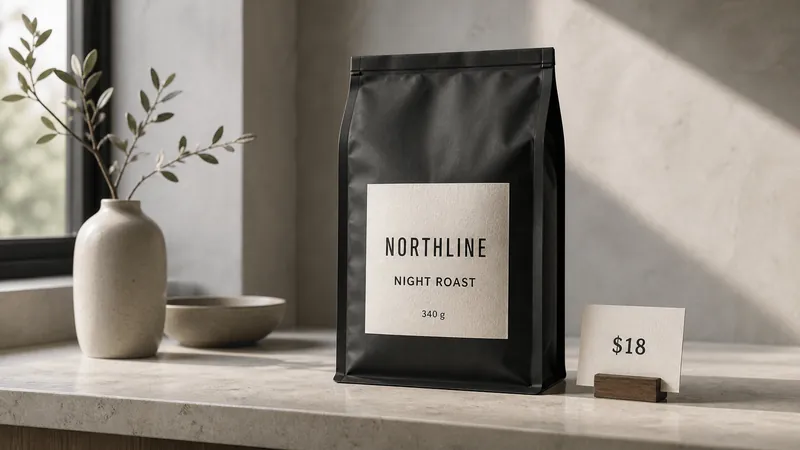 |
This render reproduces all four requested text elements correctly: NORTHLINE, NIGHT ROAST, 340 g, and $18. The label hierarchy stays readable against the textured paper, and the price card remains distinct without adding stray copy. This is one 1K generation, so it does not establish repeatability or test reference-image editing, 2K, or 4K output.
GPT Image 2 API pricing per image
| Model | Option | Our rate |
|---|---|---|
| GPT Image 2 | 1K | $0.03 |
| 2K | $0.05 | |
| 4K | $0.08 |
These rates come from UnificAlly's live price list and refresh on every deploy. The pricing page lists every model side by side.
Run GPT Image 2 at 1K, 2K, or 4K in the UnificAlly playground.
How to call GPT Image 2
The UnificAlly GPT Image 2 documentation defines the current request fields. The API is async: POST a generation, then poll until the image URL is ready.
const API = 'https://api.unifically.com';
const headers = {
  Authorization: `Bearer ${process.env.UNIFICALLY_API_KEY}`,
  'Content-Type': 'application/json',
};

const start = await fetch(`${API}/v1/tasks`, {
  method: 'POST',
  headers,
  body: JSON.stringify({
    model: 'openai/gpt-image-2',
    input: {
      prompt: 'A photorealistic packaging mockup of a matte black cosmetics bottle on a marble surface, soft side lighting, brand wordmark in clean serif type',
      resolution: '4K',
      aspect_ratio: '16:9',
      image_urls: ['https://example.com/brand-reference.jpg'],
    },
  }),
}).then((r) => r.json());

while (true) {
  await new Promise((r) => setTimeout(r, 2000));
  const task = await fetch(`${API}/v1/tasks/${start.data.task_id}`, { headers }).then((r) => r.json());
  if (task.data.status === 'completed') {
    console.log(task.data.output.image_url);
    break;
  }
  if (task.data.status === 'failed') throw new Error(task.data.error_message);
}
To draft at the lowest rate, set resolution: '1K'. A 1K generation costs $0.03. Treat it as a draft rather than a guaranteed preview of the 4K result because each generation can vary.
Open the GPT Image 2 playground and run this request.
GPT Image 2 vs Nano Banana 2
Both models support 1K, 2K, and 4K output on UnificAlly, but their current prices and supported aspect ratios differ. Compare the live rates before a batch, then test the same prompt at the resolution you plan to use.
- GPT Image 2 runs OpenAI's image stack. OpenAI's April 2026 release highlights layout control, multilingual text, and editing. UnificAlly accepts up to 16 reference images at 100 MB each.
- Nano Banana 2 offers 14 fixed aspect ratios from 1:1 through 21:9, a match-input option, and up to 20 reference images on UnificAlly.
For layouts and text-heavy images, GPT Image 2 is a useful first test. For character-led series and broader aspect-ratio coverage, Nano Banana 2 is also worth testing. Run the same prompt and references against both models, then compare text accuracy, composition, and reference consistency. Use the live pricing shown in each playground rather than assuming both calls cost the same.
Migrating off gpt-image-1
OpenAI's deprecations page lists gpt-image-1 shutdown on October 23, 2026. If your codebase still references it, plan the move before then. Two practical migration paths:
- Move
gpt-image-1work togpt-image-2before October 23, 2026. OpenAI lists GPT Image 2 as the recommended replacement. - Move
gpt-image-1.5work togpt-image-2before December 1, 2026. OpenAI has also scheduled GPT Image 1.5 for removal.
Review the OpenAI deprecations page before planning a migration. Test the same production prompts on GPT Image 2 because output style can change even when the request fields look similar.
Things to know about GPT Image 2
- Defaulting to 4K when 2K is the actual delivery target. A 16:9 web hero rarely needs 4K. 4K costs $0.08 per image against $0.05 at 2K, so match the resolution to the destination.
- Sending references that do not serve a clear purpose. GPT Image 2 supports up to 16 references at 100 MB each. Start with the images needed to define the subject, layout, or style, then add more only when they supply missing information.
- Not migrating off
gpt-image-1before October 23, 2026. OpenAI shuts the route down on that date. Calls togpt-image-1will start returning errors after deprecation. - Mixing GPT Image 2 with another model at random. If output style matters, use one model per asset class. Switching mid-workflow can introduce visual drift.
- Sending a
qualityfield to the UnificAlly route. The UnificAlly wrapper exposesresolutioninstead. Use1K,2K, or4K.
GPT Image 2 FAQ
Is gpt-image-2 the same as GPT Image 2.0?
Yes, they are the same model written differently, and developers also search the API route IDs directly (gpt-image-2, gpt-image-2-4k for the 4K tier). The API price per image is identical however you write it: the same rate card above, with 4K priced on its own row.
What is GPT Image 2?
GPT Image 2 is OpenAI's April 2026 image generation model. On UnificAlly it accepts a prompt, a resolution (1K, 2K, or 4K), an optional aspect ratio (1:1, 3:2, 2:3, or 16:9), and up to 16 reference images. Output is a single image returned through async task polling.
How much does GPT Image 2 cost?
On UnificAlly, GPT Image 2 costs $0.03 at 1K, $0.05 at 2K, and $0.08 at 4K. Billing is per generated image against the openai/gpt-image-2 price key. The pricing page lists every model's rates.
Is gpt-image-1 still available?
gpt-image-1 is scheduled for shutdown on October 23, 2026. OpenAI recommends GPT Image 2 as its replacement. GPT Image 1.5 is also scheduled for removal on December 1, 2026.
When was GPT Image 2 released?
The GPT Image 2 release date was April 2026. OpenAI announced it as part of the ChatGPT Images 2.0 launch, replacing the quality tiers used by GPT Image 1 and 1.5 with explicit 1K, 2K, and 4K resolution options. Compared to GPT Image 1.5, it also raised the reference-image limit to 16 per call.
How many reference images can I send?
GPT Image 2 supports up to 16 reference images in one call, each up to 100 MB. Start with the smallest set that clearly defines the subject or style, then add references only when they supply missing information.
How does GPT Image 2 compare to Nano Banana 2?
Both support 1K, 2K, and 4K output on UnificAlly. GPT Image 2 is a good first test for layouts and text-heavy images; Nano Banana 2 is worth testing for character-led edits and wider aspect-ratio coverage. Compare their live playground prices before running a batch.
How much does the OpenAI image generation API cost?
UnificAlly gives openai/gpt-image-2 a flat per-image price based on resolution: $0.03 at 1K, $0.05 at 2K, and $0.08 at 4K. The request uses the same async task flow as other UnificAlly generation models.
If you need OpenAI image generation with predictable per-image pricing, open GPT Image 2 and start with a $0.03 1K draft, then move the final prompt to 2K or 4K only when the destination requires it.
Related reading on GPT Image 2
- Run GPT Image 2: live playground with 1K, 2K, and 4K resolution controls.
- Nano Banana 2: compare Google's image model with GPT Image 2.
- Nano Banana Pro: Gemini 3 Pro Image at 1K, 2K or 4K.
- Flux.2: Black Forest Labs option with Flex / Pro / Max variants.
- Suno pricing and plans and Veo 3.1: pair generated images with audio and video on the same account.