Wan 2.7 Image vs Pro: price, controls, and test results
Wan 2.7 Image costs $0.021; Pro costs $0.0525. See our matched API test, output dimensions, editing controls, references, and requests.
Wan 2.7 Image is the better default for drafts, web graphics, and volume generation at $0.021 per image. Wan 2.7 Image Pro costs $0.0525 per image and is worth testing when a final text-to-image deliverable may benefit from the model family's quality-focused route and higher advertised output ceiling. Both models support the same prompt controls and image-editing workflow.
TL;DR: Start with Wan 2.7 Image unless you have a clear reason to pay Pro's higher rate. Both accept seven aspect ratios, thinking mode for text-to-image, a reproducibility seed, and up to nine reference images for editing. Pro has a higher advertised ceiling, but the current API does not expose a resolution selector. In our matched 16:9 test, both files were 2688×1536 and the standard result was competitive.
Wan 2.7 Image vs Pro at a glance
| Difference | Wan 2.7 Image | Wan 2.7 Image Pro |
|---|---|---|
| Model ID | alibaba/wan-2.7-image | alibaba/wan-2.7-pro-image |
| Price per image | $0.021 | $0.0525 |
| Maximum advertised output | Up to 2K | Up to 4K for text-to-image |
| Matched 16:9 test output | 2688×1536 | 2688×1536 |
| Positioning | Faster model for routine generation | Quality-focused model for final output |
| Text-to-image | Yes | Yes |
| Image editing | Yes | Yes |
| Reference images | Up to 9 | Up to 9 |
| Thinking mode | Yes, text-to-image only | Yes, text-to-image only |
| Aspect ratios | 1:1, 16:9, 9:16, 4:3, 3:4, 3:2, 2:3 | Same seven ratios |
| Prompt limit | 5,000 characters | 5,000 characters |
| Seed | Optional | Optional |
The choice is narrower than the names suggest. There is no separate Pro-only prompt syntax, larger reference allowance, or additional aspect ratio. You pay a higher rate per output for Pro's quality-oriented route and higher text-to-image resolution ceiling.
Wan 2.7 Image vs Pro strengths showcase
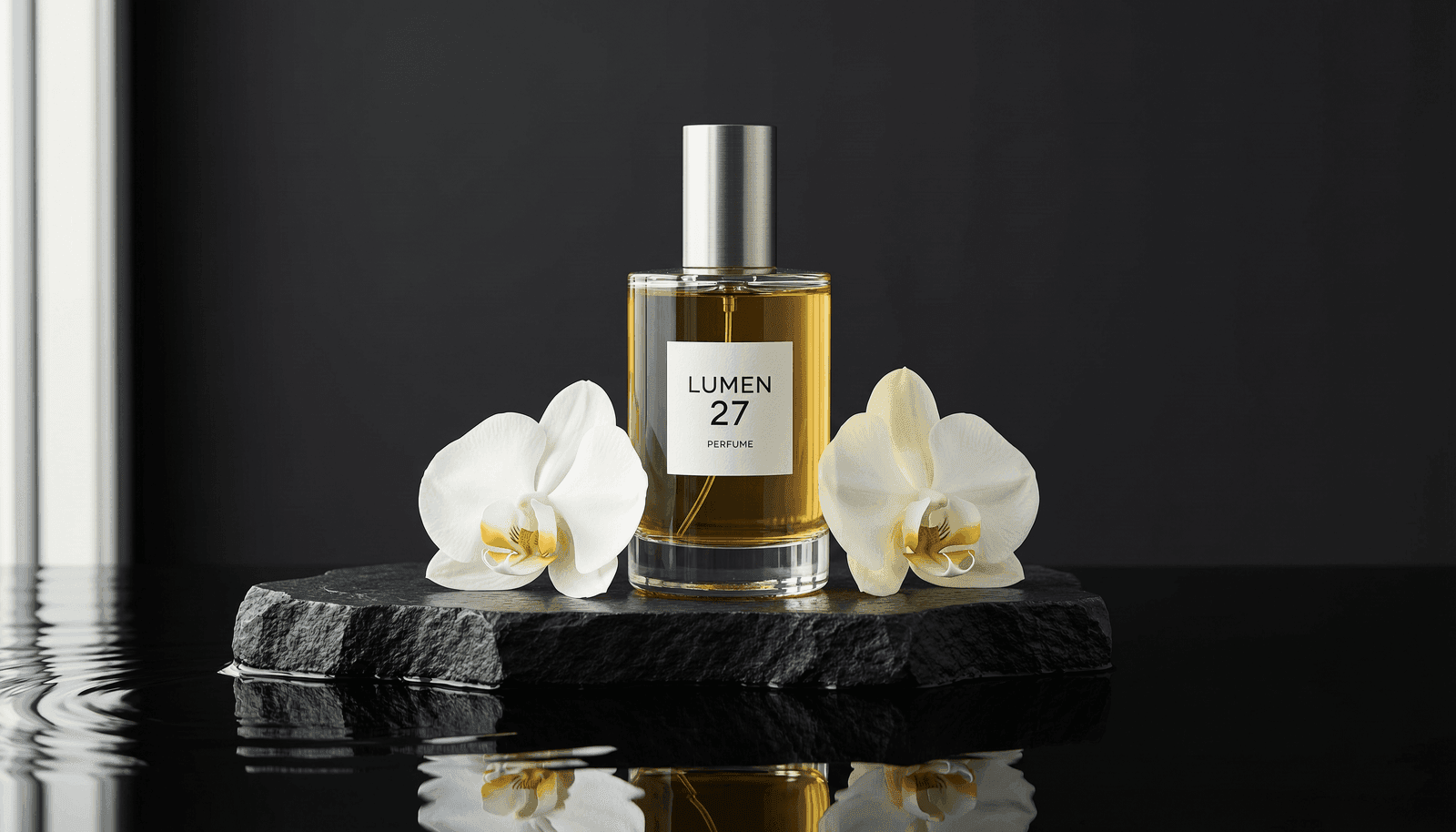
We generated both images through the UnificAlly API on August 13, 2026. The successful runs used the same prompt, 16:9 aspect ratio, thinking mode, seed 270027, and no reference images. At current rates, Wan 2.7 Image costs $0.021 and Wan 2.7 Image Pro costs $0.0525 per image.
Product detail and prompt adherence
| Test prompt | Wan 2.7 Image | Wan 2.7 Image Pro |
|---|---|---|
| "Editorial product photograph of a transparent glass perfume bottle labeled LUMEN 27 on a black stone pedestal, amber liquid, brushed aluminum cap, three white orchids, shallow water reflections, soft window light from the left, deep charcoal studio background, precise readable label, realistic glass refraction, balanced composition" | 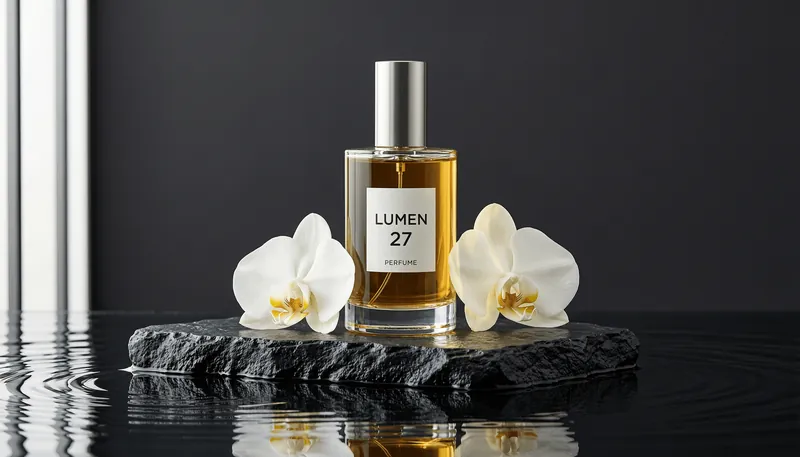 | 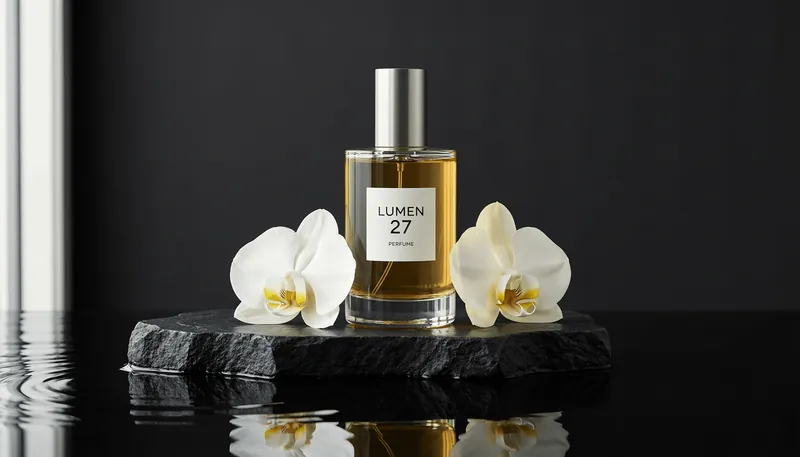 |
Both outputs reproduce LUMEN 27 correctly and retain the requested amber liquid, metal cap, dark stone, window light, and water reflections. Both miss the exact object count by showing two orchids instead of three. The standard image leaves more negative space around the product; Pro uses a tighter crop with somewhat more prominent glass and liquid detail. Both files are 2688×1536, so this pair does not demonstrate Pro's advertised 4K ceiling. It is one matched test, not a repeatability benchmark.
For this prompt, Pro did not produce a decisive improvement that automatically justified paying Pro's higher rate. The standard route is the stronger value unless a separate test on your own subject shows a visible Pro advantage.
Which Wan 2.7 image model should you use?
Choose Wan 2.7 Image when:
- The image will be delivered on a website, in an app, or in a social post where 2K is sufficient.
- You are testing prompts, compositions, or seeds before producing a final asset.
- The job includes dozens or hundreds of independent images and per-image cost matters.
- You need the faster variant and do not require a 4K text-to-image result.
Choose Wan 2.7 Image Pro when:
- The final text-to-image asset may benefit from the model's higher advertised resolution ceiling, and you can verify the returned dimensions before delivery.
- Fine product texture, small visual details, or a large delivery canvas justify a quality-focused pass.
- One approved image matters more than minimizing the cost of every attempt.
- You have already validated the prompt and want to test the same settings on the Pro route before choosing the final file.
For most workflows, draft with the standard model and reserve Pro for shortlisted prompts. A seed can help reproduce a request, but do not treat a cross-model rerun as a pixel-identical upscale: changing the model can change composition and details.
Wan 2.7 Image and Pro pricing
These are UnificAlly's current rates, pulled from the live price list.
| Batch size | Wan 2.7 Image | Wan 2.7 Image Pro |
|---|---|---|
| 1 image | $0.021 | $0.0525 |
| 100 images | $2.10 | $5.25 |
| 1,000 images | $21 | $52.50 |
Pro costs considerably more than the standard route. That premium is small for one final asset but material in an automated catalog or campaign batch.
Generate a $0.021 draft with Wan 2.7 Image.
Shared controls: prompts, references, and thinking mode
Both routes expose the same input surface:
prompt: required, with a maximum of 5,000 characters.aspect_ratio:1:1,16:9,9:16,4:3,3:4,3:2, or2:3. The default is1:1.image_urls: an optional array of up to nine reference images. Adding images switches the request to editing or image-guided generation.thinking_mode: an optional quality-oriented control that defaults totrue, available for text-to-image only.seed: an optional integer for reproducibility.
Neither route currently exposes a resolution input. Output size is selected by the model rather than requested as 2K or 4K. When image_urls is present, the model preserves the input ratio and thinking_mode does not apply. Do not send a fixed aspect ratio expecting it to reshape an editing input.
Wan 2.7 image editing and image-to-image
The standard and Pro routes both accept up to nine reference images, so Pro does not increase the editing reference limit. Use references to preserve a subject, product, palette, layout, or other visual constraint, and say what each image contributes in the prompt.
For a single-image edit, keep the instruction concrete: identify the element to change, state what must remain unchanged, and avoid mixing several unrelated transformations in one request. For multi-reference work, number the role of each source in plain language, such as subject, background, and color reference.
If your requirement is specifically 4K, note that the higher ceiling is a text-to-image advantage. The current Wan 2.7 Pro documentation describes editing with up to nine images but does not promise that every editing result is 4K.
How to call Wan 2.7 Image
The Wan 2.7 Image API documentation defines the current fields. This request costs $0.021 at the current rate.
curl -X POST https://api.unifically.com/v1/tasks \
  -H "Authorization: Bearer $UNIFICALLY_API_KEY" \
  -H "Content-Type: application/json" \
  -d '{
    "model": "alibaba/wan-2.7-image",
    "input": {
      "prompt": "Editorial product photograph of a glass perfume bottle on a black stone pedestal, soft window light, realistic reflections",
      "aspect_ratio": "16:9",
      "thinking_mode": true,
      "seed": 270027
    }
  }'
The response contains a task_id. Poll GET /v1/tasks/{task_id} until the status is completed, then read the image URL from the output.
How to call Wan 2.7 Image Pro
The Wan 2.7 Pro Image API documentation uses the same request fields. Change the model ID to call Pro; this request costs $0.0525 at the current rate.
curl -X POST https://api.unifically.com/v1/tasks \
  -H "Authorization: Bearer $UNIFICALLY_API_KEY" \
  -H "Content-Type: application/json" \
  -d '{
    "model": "alibaba/wan-2.7-pro-image",
    "input": {
      "prompt": "Editorial product photograph of a glass perfume bottle on a black stone pedestal, soft window light, realistic reflections",
      "aspect_ratio": "16:9",
      "thinking_mode": true,
      "seed": 270027
    }
  }'
Use the same prompt, aspect ratio, thinking setting, and seed when evaluating both models. Judge the result at the size where it will be delivered, not only as a small browser preview.
A practical draft-to-final workflow
- Run three to five prompt variations with Wan 2.7 Image.
- Reject weak compositions before paying the Pro premium.
- Keep the strongest prompt, aspect ratio, thinking setting, and seed.
- Run that request once with Wan 2.7 Image Pro.
- Compare returned dimensions, fine detail, text, material rendering, and composition at the intended delivery size.
- Keep the standard result if the Pro output does not produce a visible improvement.
At current rates, five standard drafts cost $0.105 and one Pro test adds $0.0525. Six Pro attempts would cost $0.315. The staged workflow costs much less while still giving the final candidate a Pro pass.
Common mistakes
- Using Pro for every draft. Pro's per-image premium compounds quickly in exploratory batches.
- Assuming Pro adds more references. Both models accept up to nine editing images.
- Sending
thinking_modewith an editing request. Thinking mode applies to text-to-image only. - Expecting aspect-ratio controls to override an editing input. Editing preserves the input ratio.
- Treating a shared seed as a guaranteed cross-model upscale. It supports reproducibility, but a different model can render a different image.
- Claiming every Pro edit is 4K. The documented 4K advantage applies to text-to-image; editing has separate output constraints.
- Assuming Pro always returns 4K. The current route has no resolution selector. Both files in our matched 16:9 test were 2688×1536.
Wan 2.7 Image vs Pro FAQ
How much does Wan 2.7 Image cost?
Wan 2.7 Image costs $0.021 per generated image on UnificAlly. One hundred outputs cost $2.10 at that rate.
How much does Wan 2.7 Image Pro cost?
Wan 2.7 Image Pro costs $0.0525 per generated image on UnificAlly, well above the standard model's rate.
Is Wan 2.7 Image Pro worth it?
Pro is worth testing when a final text-to-image asset needs output above 2K or when a quality-focused pass can justify Pro's higher rate. For drafts, web graphics, and large batches, the standard model is the better default.
Does Wan 2.7 Image support image-to-image editing?
Yes. Both Wan 2.7 Image models accept up to nine reference images for editing or image-guided generation. Editing preserves the input aspect ratio.
Does Wan 2.7 Image Pro support 4K?
Wan 2.7 Image Pro advertises up to 4K for text-to-image generation, while the standard model advertises up to 2K. The current API does not expose a resolution selector, so 4K is not guaranteed on every call. Both files in our matched 16:9 test were 2688×1536. Do not assume every image-editing result will use the 4K ceiling either.
Which aspect ratios does Wan 2.7 support?
Both models accept 1:1, 16:9, 9:16, 4:3, 3:4, 3:2, and 2:3 for text-to-image. Editing preserves the ratio of the input image.
Should I draft with Wan 2.7 Image and finish with Pro?
Yes, when the final destination benefits from Pro. Validate composition and prompt wording with the $0.021 standard model, then rerun the strongest request with Pro. Compare both outputs before deciding whether the premium is visible.
Start with Wan 2.7 Image at $0.021 per output. Move the approved prompt to Wan 2.7 Image Pro only when the higher-resolution, quality-focused route serves the final deliverable.
Related reading on Wan 2.7 Image vs Pro
- Run Wan 2.7 Image: standard text-to-image and editing up to 2K.
- Run Wan 2.7 Image Pro: quality-focused generation with up to 4K text-to-image output.
- GPT Image 2 API pricing: compare another image API with explicit 1K, 2K, and 4K prices.
- Nano Banana 2: image generation and editing with a wider aspect-ratio set.
- Qwen Image vs Nano Banana: compare two image-generation approaches for visual and text-heavy work.